CVC Story Time: A Complete Guide to Building Early Reading Skills Through Engaging Stories
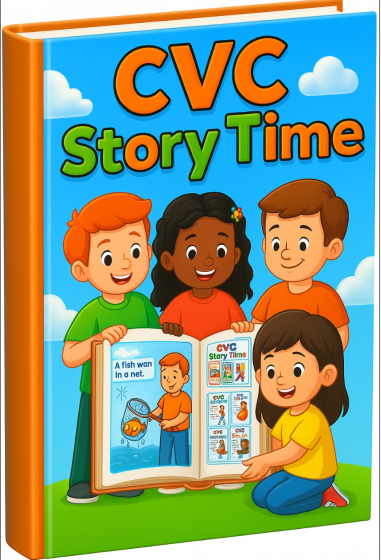
Learning to read is one of the most important milestones in a child's educational journey. For parents and educators looking to support emerging readers, CVC story time offers a proven, enjoyable approach to developing foundational literacy skills. CVC (Consonant-Vowel-Consonant) words form the building blocks of early reading, and incorporating them into story time creates a powerful learning experience that children love.
What is CVC Story Time?
CVC story time is a structured reading approach that uses simple stories containing primarily three-letter words following the consonant-vowel-consonant pattern. These stories feature words like "cat," "dog," "sun," "run," and "bed" that young readers can easily decode using basic phonics skills.
Unlike traditional storybooks that may contain complex vocabulary beyond a beginning reader's ability, CVC stories are specifically designed to match the child's current reading level. This careful construction allows children to experience success and build confidence as they navigate their first independent reading experiences.
Why CVC Words Matter for Early Readers
CVC words represent the foundation of phonetic reading. When children learn to blend individual sounds together to form these simple words, they're developing the decoding skills necessary for reading more complex text later.
The beauty of CVC words lies in their predictability. Each letter makes its most common sound, and there are no tricky vowel combinations or silent letters to confuse young learners. A child who knows the sounds for "c," "a," and "t" can confidently read the word "cat" by blending those sounds together.
Research consistently shows that systematic phonics instruction, including focused work with CVC words, significantly improves reading outcomes for beginning readers. CVC story time takes this research-based approach and makes it engaging through narrative context.
Benefits of Regular CVC Story Time Sessions
Incorporating CVC story time into your daily routine offers numerous advantages for developing readers. Children gain repeated exposure to high-frequency words in an enjoyable context, making the learning process feel natural rather than forced.
Regular practice with CVC stories helps children develop reading fluency as they encounter the same word patterns multiple times across different stories. This repetition strengthens neural pathways and makes decoding increasingly automatic.
Beyond technical reading skills, story time nurtures a love of reading. When children can successfully read entire stories independently, they experience pride and motivation to continue reading. This positive association with reading often translates into lifelong literacy habits.
CVC stories also support vocabulary development and comprehension skills. Even with simple words, these stories introduce children to narrative structure, sequencing, character development, and other essential comprehension elements.
How to Make CVC Story Time Effective
The key to successful CVC story time lies in choosing appropriate materials and creating a supportive environment. Start with very simple stories containing just a few CVC words, then gradually increase complexity as the child's skills develop.
Before reading, preview any tricky words and ensure the child knows the individual letter sounds. During reading, encourage the child to sound out unfamiliar words rather than guessing based on pictures or context alone.
Celebrate successes enthusiastically. When a child successfully decodes a challenging word, acknowledge their effort and strategy use. This positive reinforcement builds confidence and persistence.
Make story time interactive by asking questions about the story, discussing illustrations, and encouraging predictions about what might happen next. These comprehension activities ensure that children aren't just decoding words but actually understanding what they read.
Finding Quality CVC Story Time Resources
Parents and educators have access to numerous CVC story time resources, from printable books to digital materials. When selecting resources, look for stories that maintain engaging narratives despite vocabulary constraints.
Quality CVC stories feature age-appropriate content that interests young children. Topics like animals, families, daily routines, and simple adventures resonate with beginning readers and keep them engaged.
Many educational websites offer free downloadable CVC stories in PDF format, making it easy to build a diverse home library. These printable resources allow you to create physical books that children can hold, flip through, and read repeatedly.
Progression Through CVC Story Time
As children master basic CVC words with short vowel sounds, they're ready for stories incorporating word families, blends, and eventually more complex phonics patterns. This gradual progression ensures continuous challenge without overwhelming the learner.
Start with stories focusing on a single vowel sound, such as short "a" words like "cat," "mat," and "hat." Once mastered, introduce stories with different vowel sounds, then mix vowels within the same story.
Advanced CVC stories might include simple sight words alongside decodable text, preparing children for the transition to more complex reading materials. This bridge between purely phonetic text and authentic literature supports continued reading development.
Creating Your Own CVC Stories
Teachers and parents can also create custom CVC stories tailored to individual children's interests and experiences. A story about a child's pet, favorite toy, or recent family trip becomes even more engaging when featuring familiar elements.
When writing CVC stories, maintain simple sentence structures and include illustrations that support but don't replace the text. The goal is for children to rely primarily on decoding rather than picture clues.
Keep stories short initially, perhaps just four to six sentences. As confidence builds, extend the length gradually. Remember that success breeds motivation, so aim for stories that challenge without frustrating.
Conclusion
CVC story time represents a powerful tool in every educator's and parent's literacy toolkit. By combining systematic phonics instruction with engaging narratives, this approach helps children develop essential decoding skills while fostering a genuine love of reading.
Whether you're working with preschoolers just beginning their reading journey or supporting struggling readers who need foundational skill reinforcement, CVC story time offers an accessible, effective solution. The investment of time in regular CVC story sessions pays dividends as children progress toward reading independence and lifelong literacy.
Start incorporating CVC story time into your daily routine today, and watch as young readers blossom with confidence and skill. With consistent practice, patience, and encouragement, every child can experience the joy and empowerment that comes from reading their very first stories independently.